Q. 6
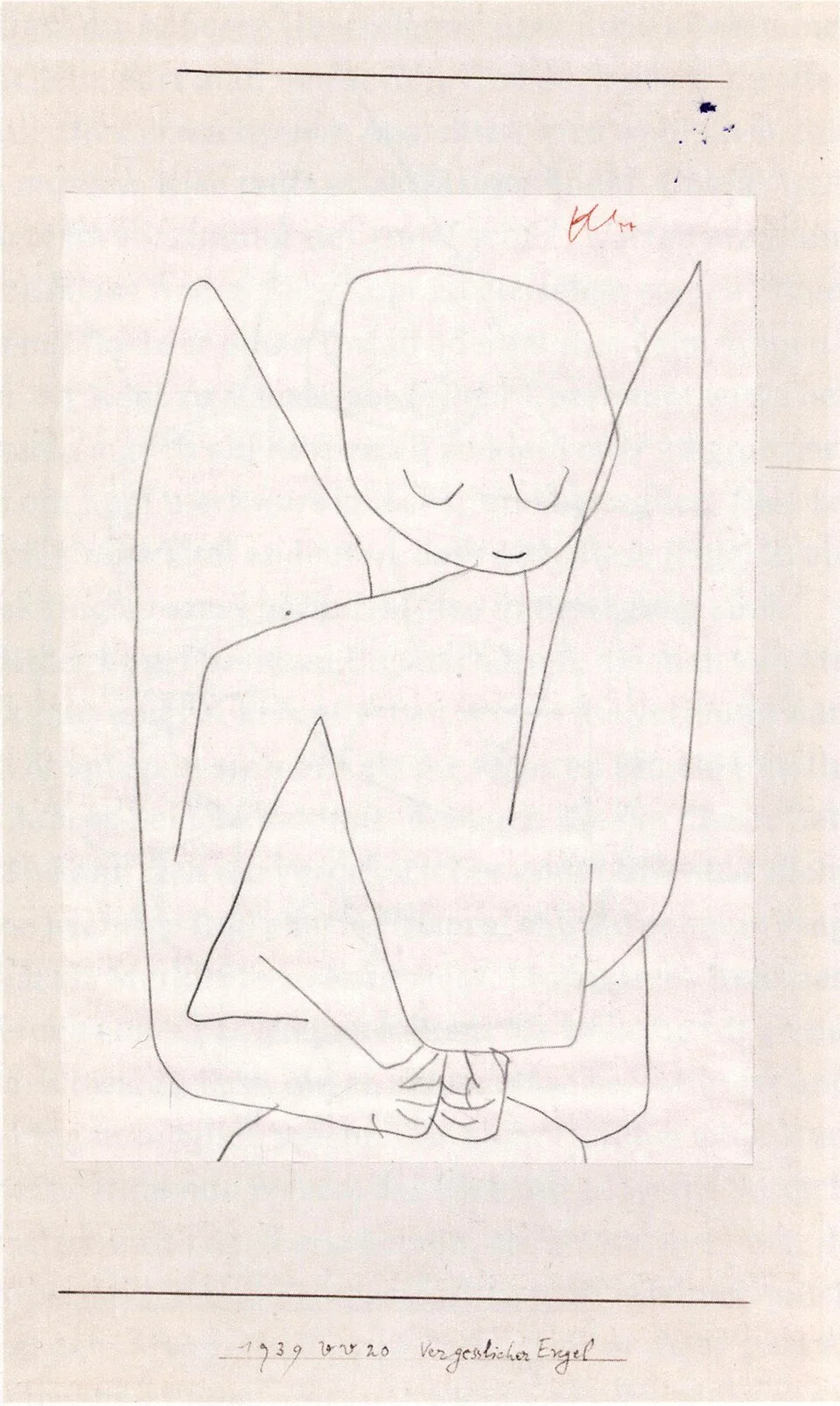
Klee, Paul. Forgetful Angel. 1939, Paul Klee Centre, Bern.
.
.
.
In 1939, Paul Klee had lost almost everything — his life abroad, his teaching position, and his health. But it was this very period that he drew roughly 1,200 angels.
Before then, Klee was a prominent artist based in Germany. Although he was born and raised in Bern, Switzerland, he was the son of a German music teacher, who gave him German citizenship.
In 1933, however, the Nazis forced him to return home, calling him a dangerous, second-grade artist whose art served no good to the public. He was not welcomed in Switzerland either due to his dual identity. To make matters worse, in 1935, Klee was diagnosed with a severe autoimmune disease, which made it impossible to continue painting. By then it was clear: his entire career, as well as his own life, was quickly coming to an end.
In 1939, in the midst of such misfortunes, something shifted inside him. He throws away his colorful, mathematical style, and begins to draw simple angelic figures. His angels are special because they’re so much human, far from perfection — they forget, they cry, they crouch, they sleep.
Klee passed away in 1940, at the age of sixty. He still had no Swiss citizenship or warm reception from the art scene.
Today, the city of Bern is incredibly proud of Klee; and his shaky, childish angels continue to carry the depth of his human soul.
.
.
.
What do you do, when life doesn’t give you what you wanted.
Do you smile.
Do you sigh.
Do you pray.
Tell me: how do you endure, without hurting yourself.
How do you continue, forgive, and give, without regret.
.
.
.
